


Background
Medical education faces significant challenges that have persisted for decades. Students struggle with flat textbooks and 2D diagrams that fail to capture the complexity of human anatomy. Traditional learning methods limit understanding of complex 3D structures, making it difficult for students to visualize how organs and systems interact within the body.
Cadaver access remains expensive and limited across educational institutions. Many students never get hands-on experience with real human anatomy, creating gaps in their learning experience. Remote learning has made these problems worse, as students lose access to physical labs and demonstration materials.
3D Organon VR emerged as a solution to bridge this gap between traditional medical education and modern technology needs. The platform brings medical education into virtual reality, allowing students to explore human anatomy in three dimensions from anywhere in the world.
Objectives
The primary goal was to create immersive VR experiences specifically designed for medical students learning anatomy and physiology. The team aimed to replace traditional textbook learning with interactive 3D models that would provide unlimited access to human anatomy without physical constraints.
Supporting remote learning and distance education became crucial, especially as educational institutions adapted to new learning formats. The platform needed to make medical education more engaging and effective while reducing dependency on expensive cadaver labs.
Another key objective was enabling students to learn at their own pace, accommodating different learning styles and schedules across diverse educational environments.
Solution
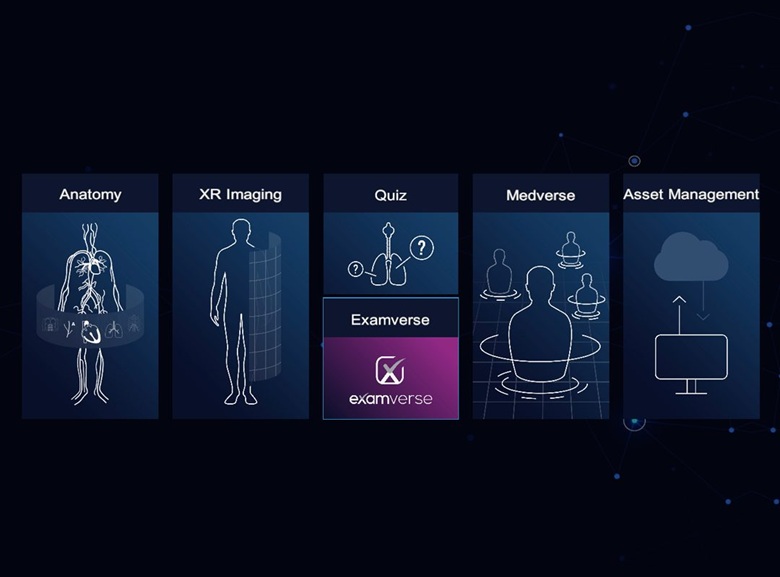
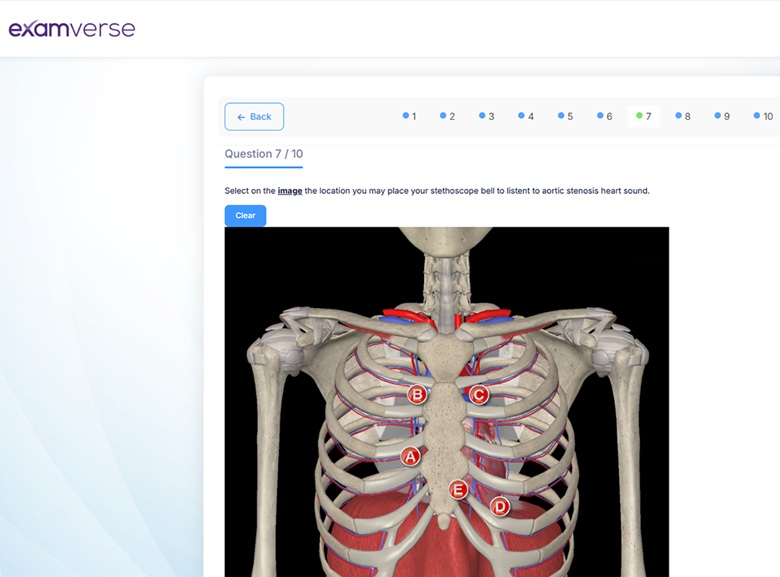
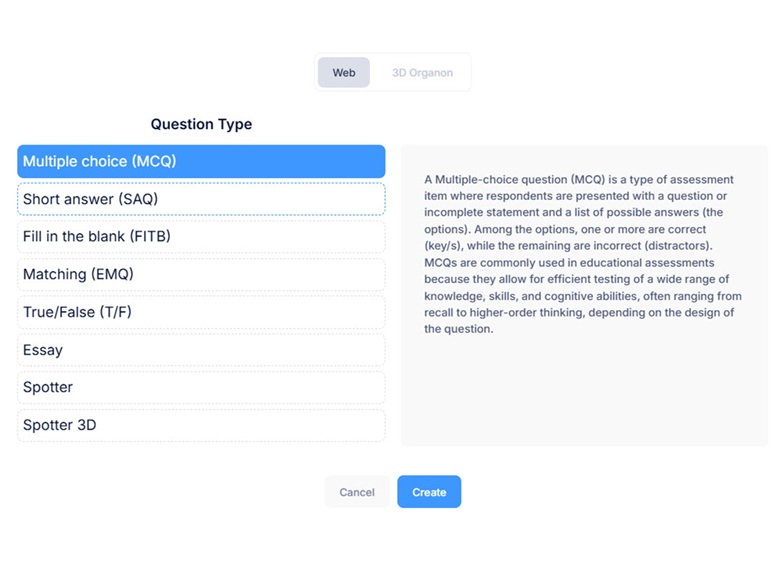
The ExamVerse Platform Launch represented a major milestone in VR medical education. The team built a comprehensive VR examination system that created realistic testing environments with secure assessment tools. They developed multiplayer capabilities for group learning, allowing students to collaborate and learn together in virtual spaces.
Major Platform Updates focused on enhancing VR performance and graphics quality to provide the most realistic experience possible. The team expanded the anatomy model library significantly, improved user interface design for better usability, and added new interactive features that made learning more engaging.
The platform now includes over 15,000 anatomical structures in 3D with real-time dissection capabilities that let students explore anatomy layer by layer. Voice-guided learning modules provide audio support, while cross-platform compatibility ensures access across different devices. Multi-language support makes the platform accessible to international students, and collaborative learning spaces enable group study sessions.
Results
Platform adoption has grown significantly, with medical schools worldwide now using 3D Organon VR as part of their curriculum. Thousands of students access the platform daily, and feedback from educators and students remains consistently positive. Educational institutions report reduced training costs compared to traditional cadaver-based learning.
Learning outcomes show measurable improvements across multiple metrics. Students demonstrate better retention rates when using VR compared to traditional methods, and they show improved understanding of spatial relationships between anatomical structures. Many institutions report faster completion of anatomy courses and higher engagement levels in classes.
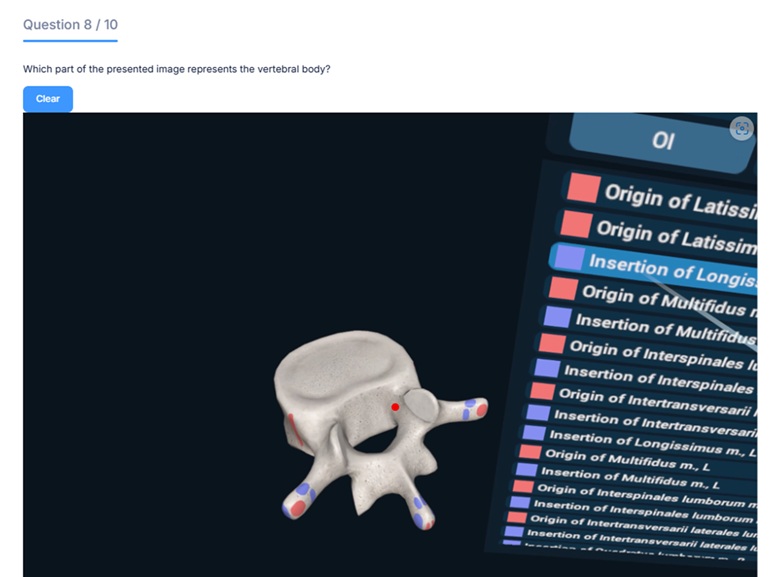
Technical achievements include stable VR performance across different devices and real-time rendering of complex 3D models without compromising quality. The platform has successfully integrated with existing curricula at numerous institutions, and the scalable architecture supports growing user bases without performance issues.
The market impact has been substantial, with 3D Organon establishing itself as a leading VR medical education platform. The company has formed partnerships with major educational institutions and received recognition from the medical education community. The platform continues to experience steady growth in its user base as more institutions adopt VR technology for medical training.
The platform proves that VR can transform medical education by providing students with immersive experiences that make complex anatomical concepts easier to understand and remember.
COMPANY: 3D Organon
