

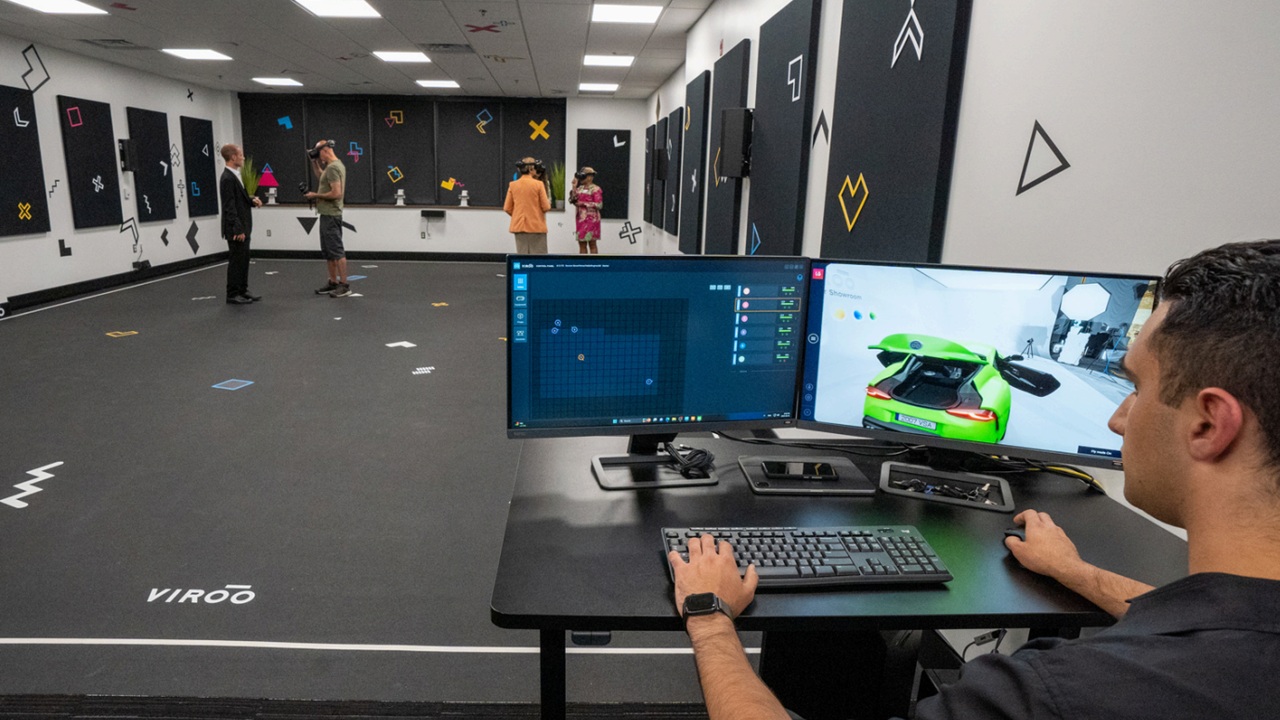
McMaster University Faculty of Engineering’s IMRSV@MAC platform accelerates applied research for regional development.
McMaster University is a public research university located in Hamilton, Ontario, Canada and is renowned for its innovative approach to education and research. Founded in 1887, McMaster has established itself as one of Canada’s leading research-intensive universities with approximately 36,000 students. The university is home to more than 70 research centers and institutes and is recognized globally for its medical school, engineering program, and commitment to problem-based learning. McMaster consistently ranks among the top 100 universities worldwide and is classified as a research-intensive institution with a strong focus on interdisciplinary collaboration and innovation.
The Faculty of Engineering at McMaster University is particularly distinguished for its excellence in research and education across various disciplines including mechanical, electrical, civil, chemical, and biomedical engineering. With over 4,500 undergraduate students and 1,000 graduate students, the Faculty of Engineering has built a reputation for developing innovative solutions to complex engineering challenges through collaboration with industry partners and government agencies.
One of the strategic priorities for the Faculty of Engineering is advancing digital engineering methodologies and applying extended reality (XR) technologies to enhance both research capabilities and educational outcomes. To meet this growing need, McMaster Engineering has implemented IMRSV@MAC powered by VIROO, a state-of-the-art collaborative space designed to accelerate innovation and learning through immersive technologies.
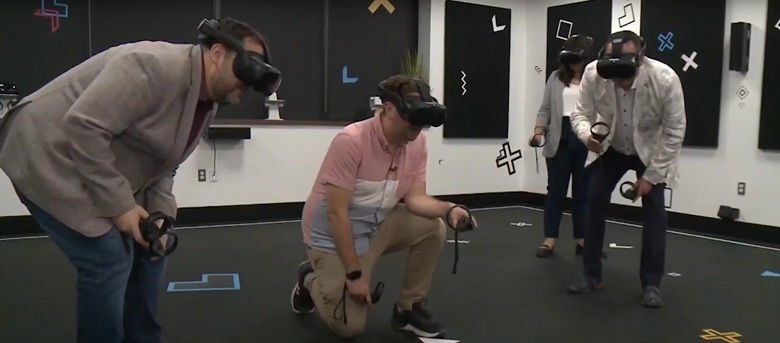
“The unveiling of the custom-built immersive room will provide access to students, faculty, and businesses to push boundaries and explore the use of VR tools and technologies in the region,”
– Ali Emadi, engineering professor and Canada Research Chair in Transportation Electrification and Smart Mobility, McMaster Engineering.
Engineering disciplines are increasingly relying on digital tools and immersive technologies to visualize, prototype, and validate complex designs before physical production. The Faculty of Engineering recognized the need for a collaborative environment that would allow researchers, students, and industry partners to work together in virtual spaces using 3D models and simulations regardless of their physical location. The VIROO Room was conceived as a versatile platform that could support multiple engineering disciplines while providing an intuitive, seamless experience for users with varying levels of technical expertise.
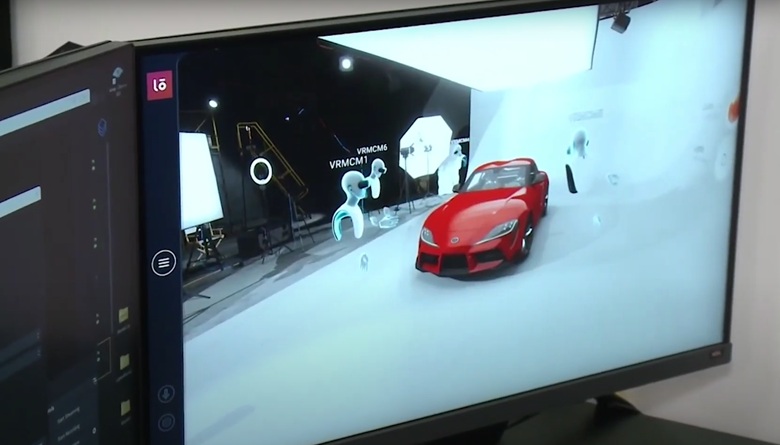
With IMRSV@MAC, McMaster has dramatically reduced the time from concept to validation for many research projects. Faculty members can upload their 3D models or simulations to the VIROO platform directly from their workstations, then schedule collaborative sessions where participants can join either physically in the VIROO Room or virtually from remote locations. This flexibility has been invaluable for maintaining research momentum and fostering collaboration, especially with international research partners.
“This is an exciting partnership that will not only lead to new technologies to solve the world’s biggest challenges but will also attract new strategic partners in Canada an internationally,”
– John Preston, Associate Dean, Research, Innovation and External Relations, McMaster Engineering.
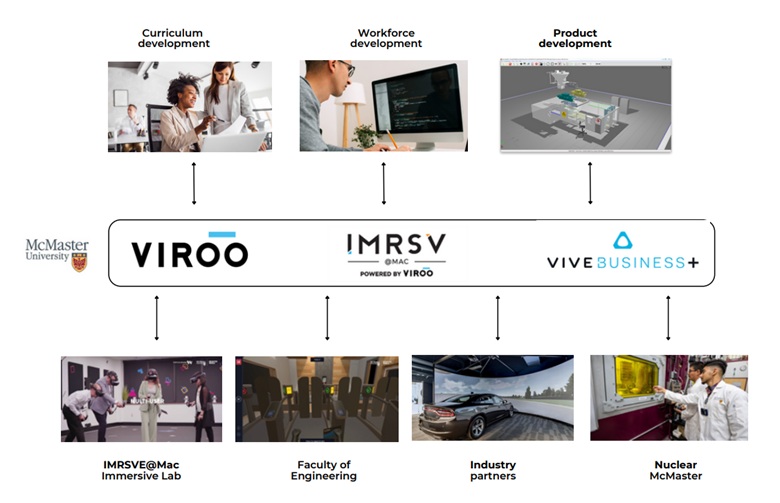
Students have also embraced the program enthusiastically. Engineering classes now incorporate virtual reality enabled sessions where students can access realistic simulations of industrial equipment that would be too expensive or hazardous to interact with physically. They can create their own engineering models using standard tools and then upload them to the IMRSV@MAC cloud platform for presentation and critique by classmates and instructors, whether they’re physically present in the lab or joining remotely via desktop or VR device.
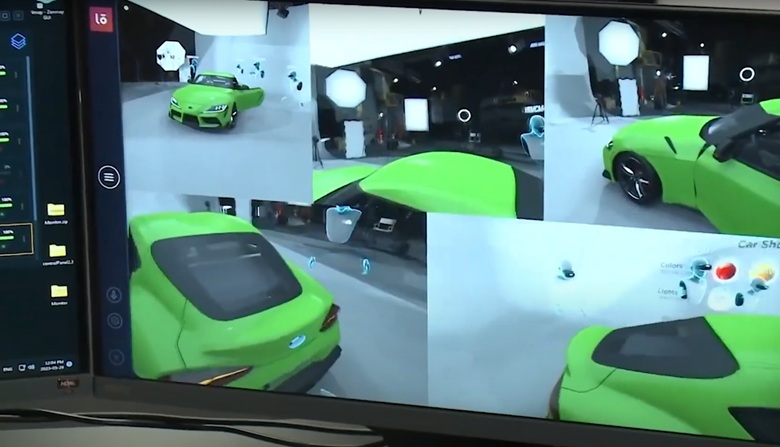
IMRSV@MAC serves as a shared infrastructure resource accessible to all departments within the Faculty of Engineering, as well as collaborators from other faculties, external industry partners, and government agencies. The university has established a straightforward reservation system that democratizes access to this powerful technology without creating additional barriers for researchers, educators, or companies looking to leverage the unique utility of such an advanced amenity on a fractional level.
“The collaboration will help companies start their VR journey, giving them the opportunity to incorporate the VR platform in their daily operations, so they can be more competitive and improve their processes,”
– Ali Emadi, engineering professor and Canada Research Chair in Transportation Electrification and Smart Mobility, McMaster Engineering.
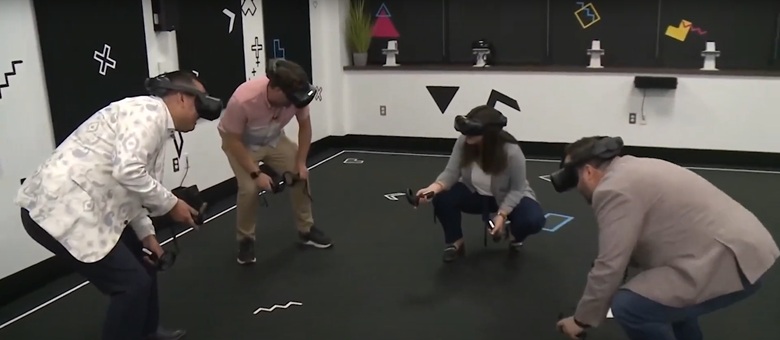
The versatility of the IMRSV@MAC has allowed McMaster Engineering to reimagine how they approach complex engineering challenges and has created new opportunities for interdisciplinary collaboration. It’s not just enhancing existing workflows – it’s enabling entirely new approaches to engineering design, education, and research validation that weren’t possible before.
IMRSV@MAC has positioned McMaster Engineering at the forefront of digital engineering education and research, providing a flexible platform that adapts to the diverse needs of modern engineering disciplines while preparing students for careers in increasingly digitized industries.
COMPANY: Virtualware
